Packaging and shelf life for flour and grain brands
By Sanjeet Kumar, Executive Director, BKFPCL · Updated · 2 min read
Key takeaways
Flour keeps for a shorter time than whole grain, because milling exposes the oils in the grain to air. Some millet flours, bajra in particular, are known to turn stale faster.
Choose a pouch for the barrier it gives against moisture and air, then for its looks. Test it by shipping it.
Set the shelf life from a test or from the supplier’s record, and print the date of manufacture or packing and the expiry on every pack.
The pack must keep the product in good condition from your door to the customer’s kitchen, and a little beyond.
What spoils flour
Three things: moisture, air and warmth. Damp flour grows mould. Air and heat turn the natural oils in the grain stale, which tastes bitter or sour. Insects can also get into a weak pack.
Whole grain has a hard outer layer that protects it. Flour does not. That is why whole grain keeps longer and why a flour brand must think harder about its pack. Millet flours differ, and bajra is known to go off sooner than some others. Treat that as a reason to test, not a reason for a number you guess.
Choosing a pouch
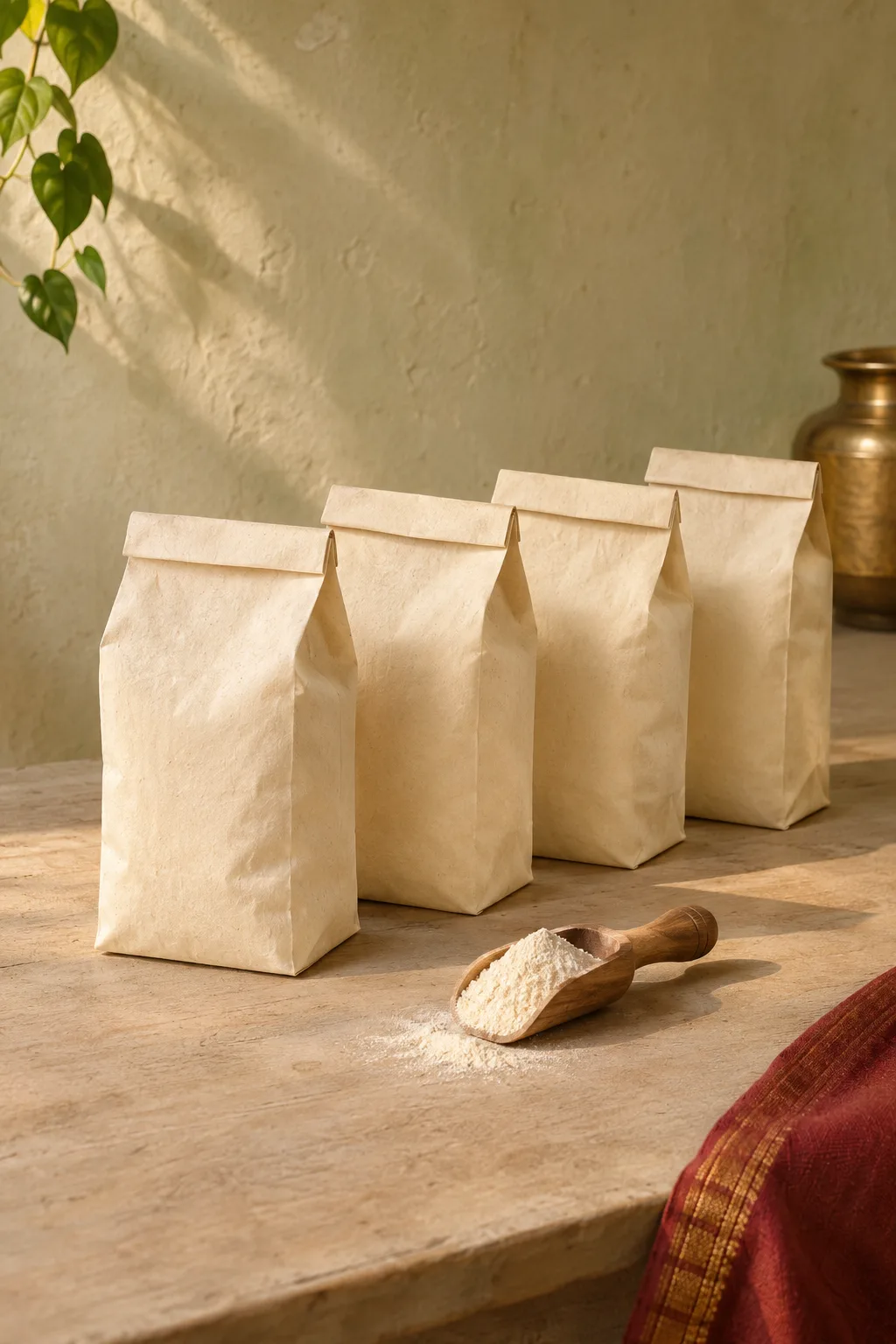
Ask the pack supplier for the material, the thickness and the seal type. These are the usual options.
Option
Good at
Watch for
Plain poly pouch
Low cost
Weak barrier. Poor for long shelf life.
Laminated pouch (layers of film)
A better barrier to moisture and air
Higher cost and print minimums
Stand-up pouch with a zip
Looks good on a shelf and reseals
A weak zip can leak in transit
Pouch inside a carton or outer bag
Protects in shipping
Adds weight and cost
Pack size matters
Smaller packs are opened sooner and finished sooner, so the flour stays fresher in the customer’s kitchen. Larger packs lower the cost per kilo but sit open for longer. Choose the size by how fast your buyer uses the product.
For the sizes we supply, see bulk pack sizes. A brand that repacks into retail pouches usually starts from the 5 kg and 10 kg bags.
How to set a shelf life
Ask the supplier when the flour was milled, and how stock is held before packing.
Store sample packs in the conditions a customer would, and open one on a schedule to check the smell, taste and look.
Ask a lab for a shelf-life study if you plan a long date.
Choose a date that leaves a margin of safety, not the longest date the product might survive.
What the label must say about dates
The FSSAI label rules require the date of manufacture or packing and the expiry or use-by date on the pack. “Best before” can be added. If the date depends on how the food is stored, the label must also state the storage condition. Details are in FSSAI and label rules for a new brand.
Test the pack by shipping it
Fill ten packs. Send them by the courier you will use, to addresses in different cities. Check seals, tears and leaks on arrival. A pouch that looks good on a desk can split in a courier bag.
Keep a few packs at home and open them at one, two and three months to see how the flour ages.
Store the stock well too
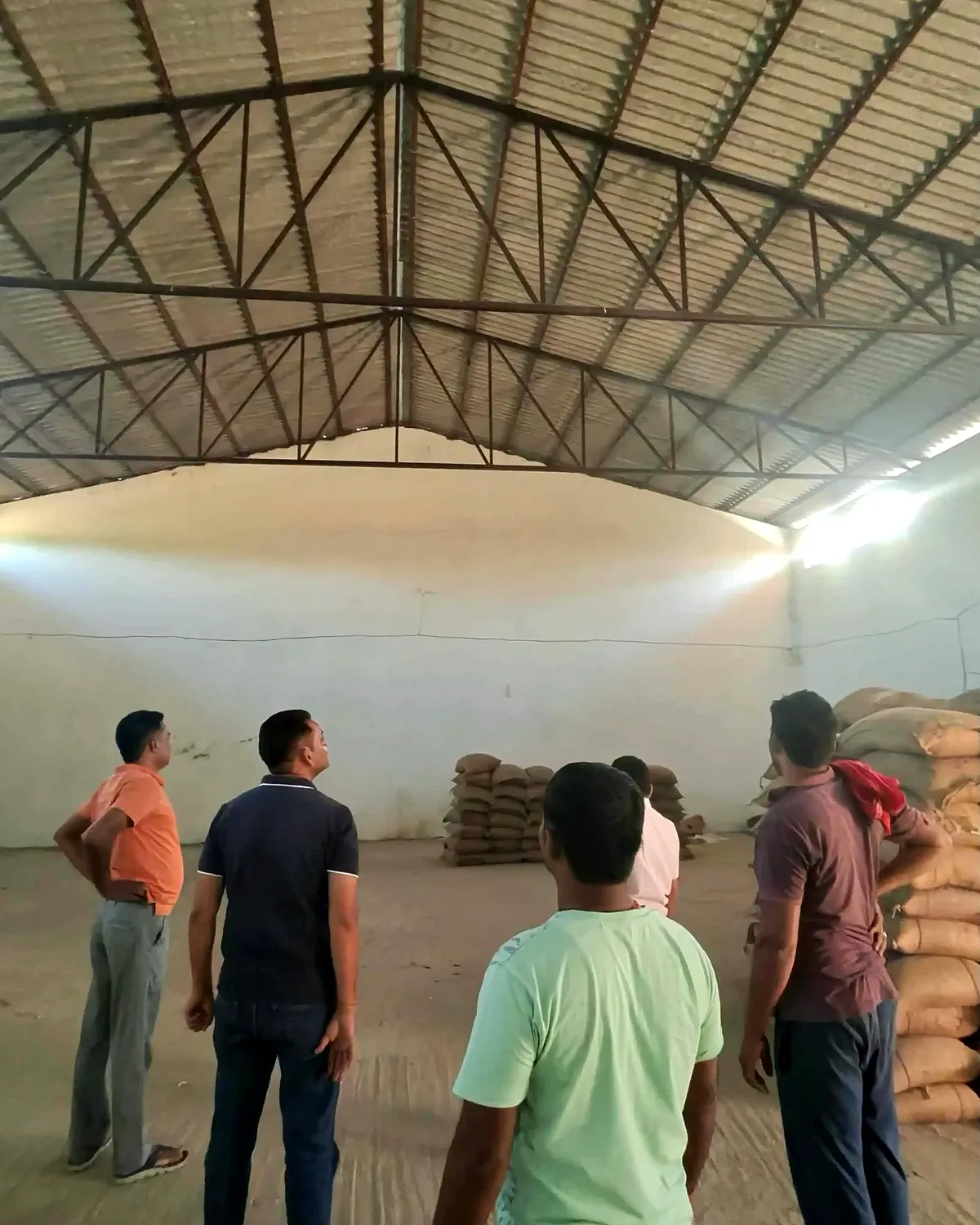
Keep bags off the floor, away from walls, in a cool and dry place. Use the oldest stock first. How to store flour and grains in bulk covers the rules.
How we work with brands
Barahiya Krishi Fed Producer Company Limited packs under your label or supplies bulk bags for you to repack. Tell us the pouch you plan to use, and we will tell you how we can fill it. The minimum order for a new custom pack is ₹5 lakh. If you take Grain Sutra packs or bulk packing, it can be lower and is agreed on a call.
It depends on the millet, how it was milled and stored, and the pack. Whole grain keeps longer than flour. Do not guess a number: test it, or ask your supplier for its record, and print the date the test supports.
Which pouch is best for flour?+
A laminated pouch gives a better barrier to moisture and air than a plain poly pouch. Choose by barrier and seal strength, then by looks, and test it by shipping it.
Does flour need to be stored cold?+
A cool, dry store is enough for most stock. Heat and damp are the main risks. Follow the storage condition you print on the pack.
Can you pack in my pouch?+
Tell us the pouch and size. We can pack under your label in a custom pack, or supply bulk bags for you to repack.
 TM