 TM
The people behind the pack
750 farmers, 14 villages, one company.
Grain Sutra is grown by 750 farmer shareholders in 14 villages of Barahiya block, Lakhisarai, Bihar. Most are marginal or small farmers; 121 are women.
The villages
Fourteen villages of Barahiya block are tied to one registered office. Every member farms in one of them.
The members in figures
Only totals are published. Individual members appear on this site by name only with their written consent.
| Farmer shareholders | 750 |
|---|---|
| Villages | 14 |
| Land farmed by members | 758 ha |
| Average holding per member | 1.01 ha |
| Marginal farmers | 459 |
| Small farmers | 217 |
| Women members | 121 |
| Women as a share of members | 16% |
As of Jan 2026. See sources
A year on the tal and the diara
Our members farm two kinds of low land. The tal is low ground that fills with water in the monsoon. The diara lies on the banks of the Ganga, in villages such as Khutaha. On both, the water sets the calendar: nothing can be sown until it drains, and the last crop must be cut before it returns.
That leaves about eight months, from the first rabi sowing after Diwali to the garma harvest before the rains, to grow everything the land will give in a year.
Indicative months, from our members’ farming practice and public sources: Down To Earth, ICAR-CRIDA district plan.
November
The water goes down. After Diwali the rabi sowing begins.
The drawing is an illustration: the depth of the water is not to scale, and the months shift a little each year.
Month by month
- September: Floodwater stands on the low fields. Nothing can be grown.
- October: The monsoon ends, but the water drains slowly. Sowing has to wait.
- November: The water goes down. After Diwali the rabi sowing begins.
- December: Rabi sowing goes on, a little later where the fields dried late.
- January: The rabi crops grow: wheat, masoor, chana and matar.
- February: The first rabi harvest begins, pulses and oilseeds first.
- March: The rabi harvest ends around Holi. Then the garma crop goes in.
- April: Garma crops, moong and til, grow in the heat.
- May: The garma crops ripen. The race against the rain begins.
- June: Garma harvest must finish before the monsoon arrives, on average in the third week of June.
- July: The monsoon is here. The low fields start to fill.
- August: Floodwater covers the fields. The land is under water until after the rains.
In the villages
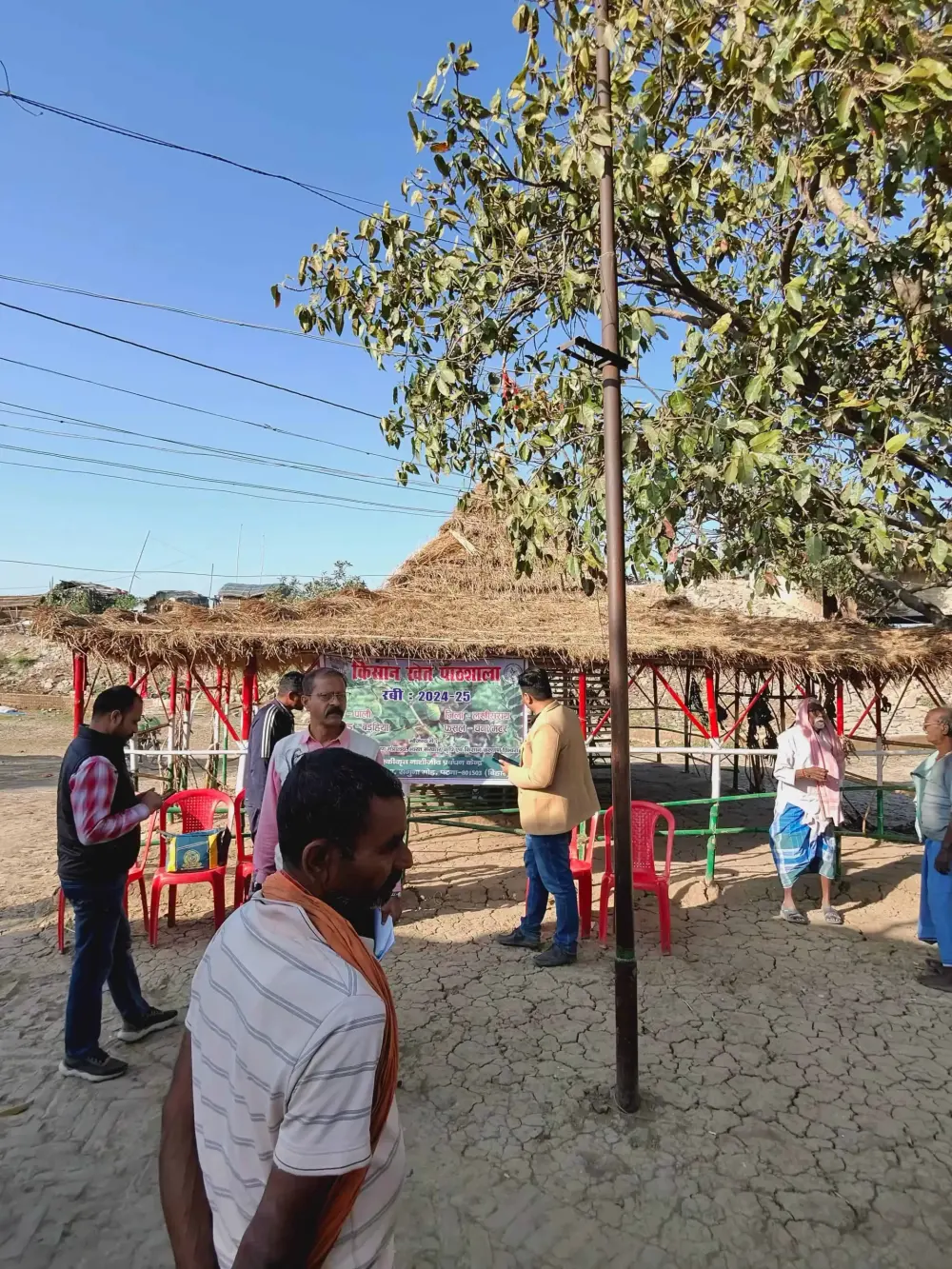
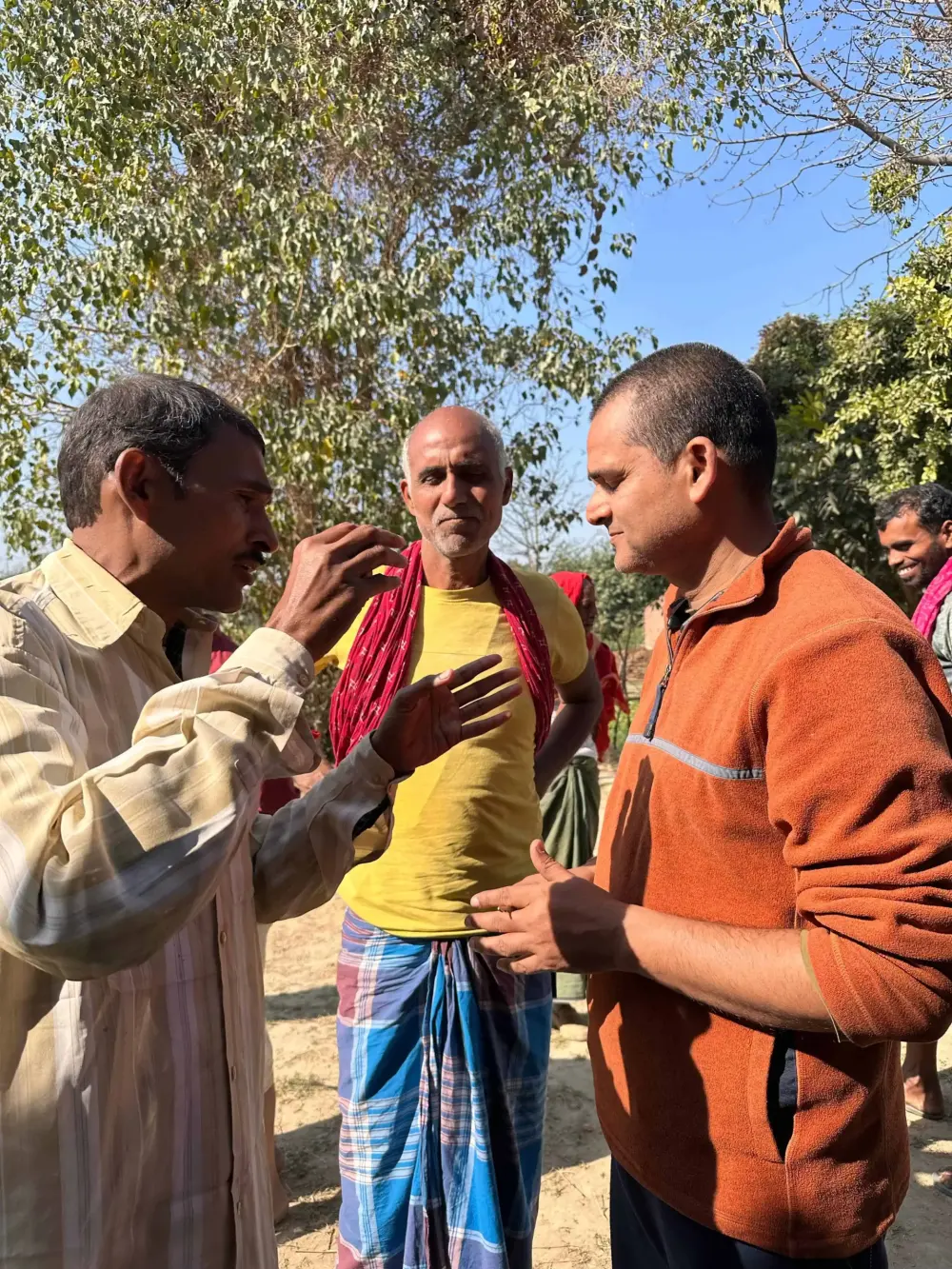
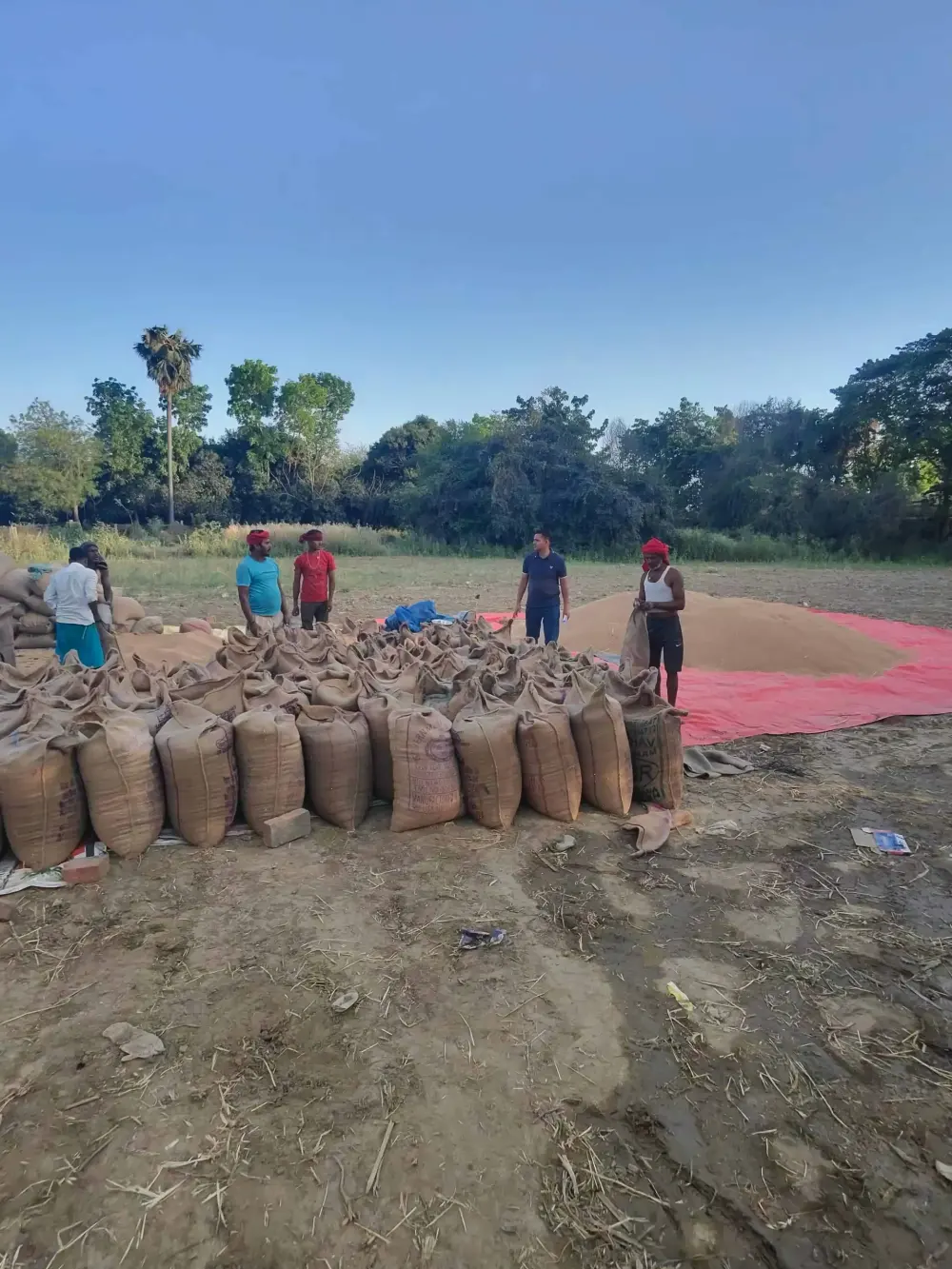
Photographs from member meetings and from the fields and stores around Barahiya.
More about the people and the place: Barahiya, Lakhisarai: where our grain comes from and Sona Moti wheat returns to Lakhisarai.
किसान साथी, समूह से जुड़ें।
अपनी रुचि दर्ज करें; समूह की ओर से आपको फ़ोन आएगा।