12 questions to ask a grain supplier before your first order
By Sanjeet Kumar, Executive Director, BKFPCL · Updated · 3 min read
Key takeaways
Ask every supplier the same twelve questions and write the answers down. Compare them side by side before you compare prices.
The questions that matter most are about the exact variety, the spec, a sample, a lab report, the lot number, the shelf life and what happens when a lot is bad.
A good supplier answers plainly and in writing. A vague answer, or no answer, is information too.
Barahiya Krishi Fed Producer Company Limited shows its FSSAI registration and GSTIN on its licences page, arranges lab reports when needed and answers the rest on a call, with a spec sheet and a sample for your product.
How to use this list
Send the questions by email so you have the answers in writing. Then talk on the phone about anything that is unclear. Put the answers from each supplier in one table. You will see the gaps quickly.
The twelve questions
Each has a note on what a good answer sounds like and what to watch for.
1. What exactly is the grain? A good answer names the crop, the variety and the area. Watch for: “mixed” or “local”.
2. What is the specification? Ask for moisture, cleanliness and, for flour, fineness. A good answer is a spec sheet with numbers. Watch for: “as per market”.
3. Can I have a sample first? A good answer is yes, with a lot number on the sample. Watch for: refusal, or a sample from a different lot than the order.
4. Will you give a lab report for my lot? A good answer is yes, from a named lab. Watch for: a report with no date or lot number. Ours: we arrange lab reports when needed, for your order.
5. Is every bag traceable? A good answer is a lot number that leads to a date and a place. Watch for: none.
6. When was the flour milled, and when will it be packed? Flour ages. A good answer gives dates and says how stock is held. Watch for: old stock sold as new. Ours: we source each order from scratch and keep little stock, so your lot is sourced for you.
7. What is the shelf life, and how do you know? A good answer comes from a test or from clear storage rules. Watch for: a round number with no reason.
8. Which licences and registrations do you hold? A good answer gives numbers you can check. Our FSSAI registration number is on the licences page. Watch for: “we are in the process”.
9. What pack sizes and materials, and who prints the label? A good answer lists sizes and says who handles print. Our grain packs are 5, 10, 15, 20 and 40 kg.
10. What is the minimum order, and what changes it? A good answer is a clear figure and the reasons. Ours: ₹5 lakh for a new custom pack, lower for Grain Sutra or bulk packing, agreed on a call.
11. What is the lead time, and what about repeat orders? A good answer gives a time and says what could delay it, such as the harvest. Ours: each order is sourced from scratch, so lead time includes sourcing. We agree it with you on the call.
12. What happens if a lot is bad? A good answer names a process: how to report it, how it is checked and how it is replaced or credited. Watch for: “that never happens”.
Three more checks that cost nothing
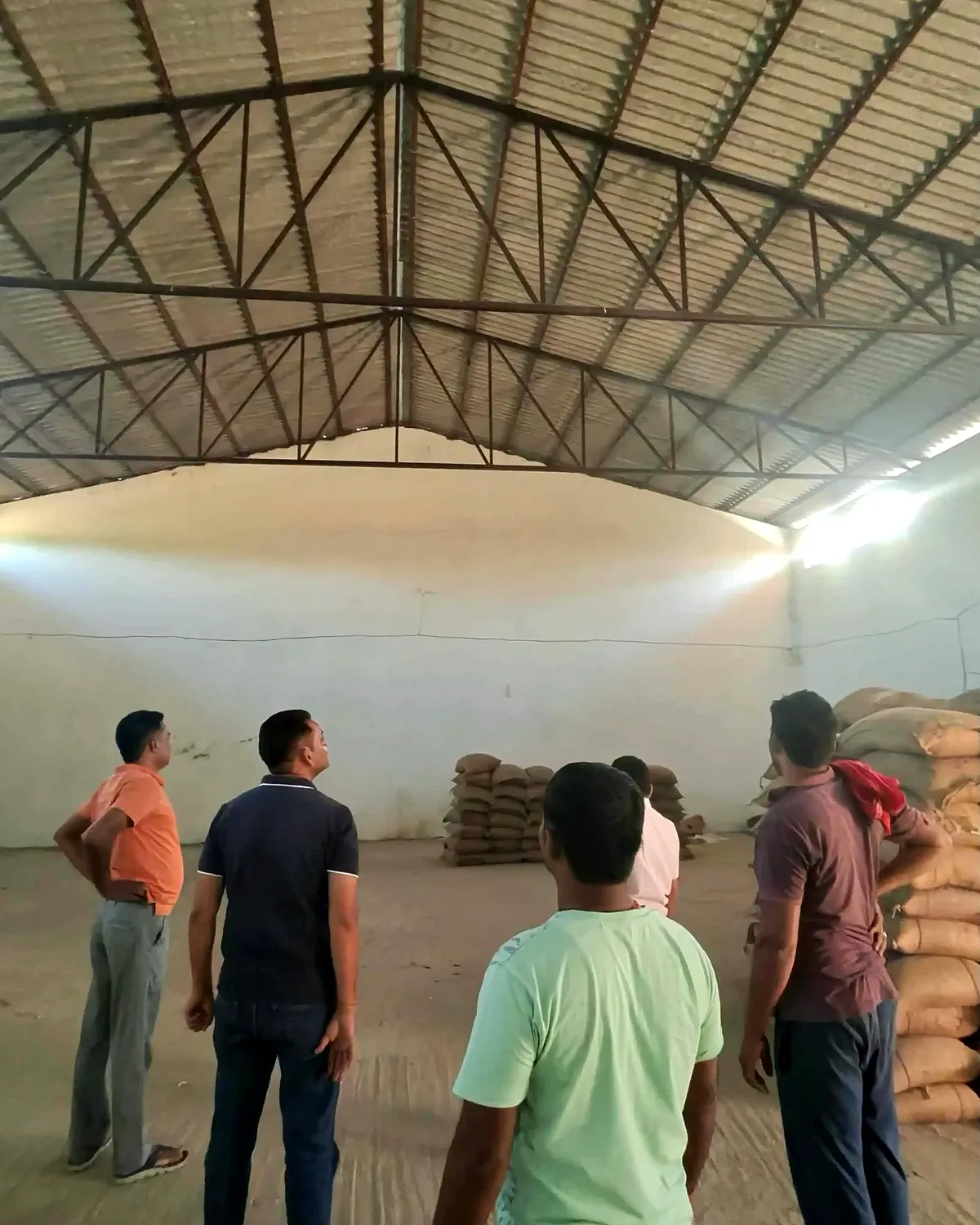
Visit or video-call the site. See the store, the cleaning and the milling. A producer company in a village is usually glad to show you.
Ask for a reference. A buyer who orders regularly can tell you more than a brochure.
Read the invoice. It should carry the company name, address and GSTIN. See ours on the fact sheet.
What a spec sheet should show
A spec sheet is one page. For flour it names the product, the variety, moisture, cleanliness, fineness, pack sizes, shelf life and storage. It is dated, and it names who issued it. If a supplier cannot give you one, ask why. How to buy millet flour in bulk lists what to request.
How we answer
Barahiya Krishi Fed Producer Company Limited sends a spec sheet and a sample for your product, and arranges a lab report for your lot when needed. We pack under your label, blend to your recipe and introduce partners for finished products. The minimum order for a new custom pack is ₹5 lakh. If you take Grain Sutra packs or bulk packing, it can be lower and is agreed on a call.
What documents should a grain supplier give a new brand?+
A tax invoice, the company’s registration details, a spec sheet and, when needed, a lab report for your lot. For packed food, the supplier’s FSSAI licence number will also go on your label if it packs for you.
How do I check the quality of flour before a big order?+
Order a sample, check the smell and colour, cook with it, and ask for a lab report. Repeat with a second lot to see if the supplier is consistent. See how to source grains for a D2C brand.
Should I pay in advance?+
Agree the terms before you order and put them in writing. A new brand often pays part up front for a custom pack. Ask what you get in return, such as the spec, a sample approval and a delivery date.
Can I visit the supplier?+
Ask. A good supplier will show you the store and the mill, in person or on video. Call us to arrange it.
 TM